
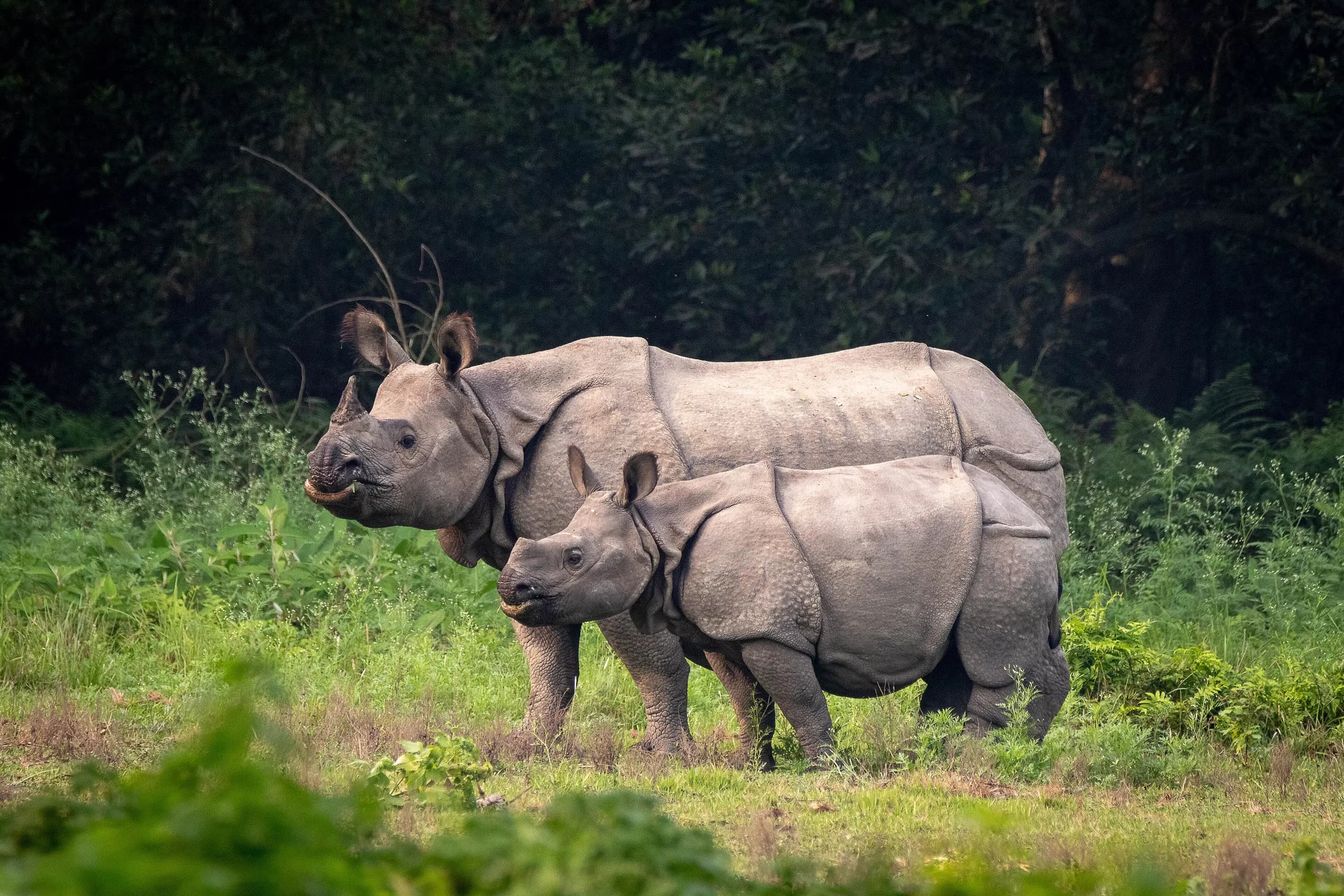

Chitwan National Park lies in the lowland Terai of southern Nepal, a world away from the Himalaya. Established in 1973 as Nepal’s first national park and listed as a UNESCO World Heritage Site in 1984, it protects sal forest, grassland and riverbanks along the Rapti, Narayani and Reu rivers.
Wildlife you can see
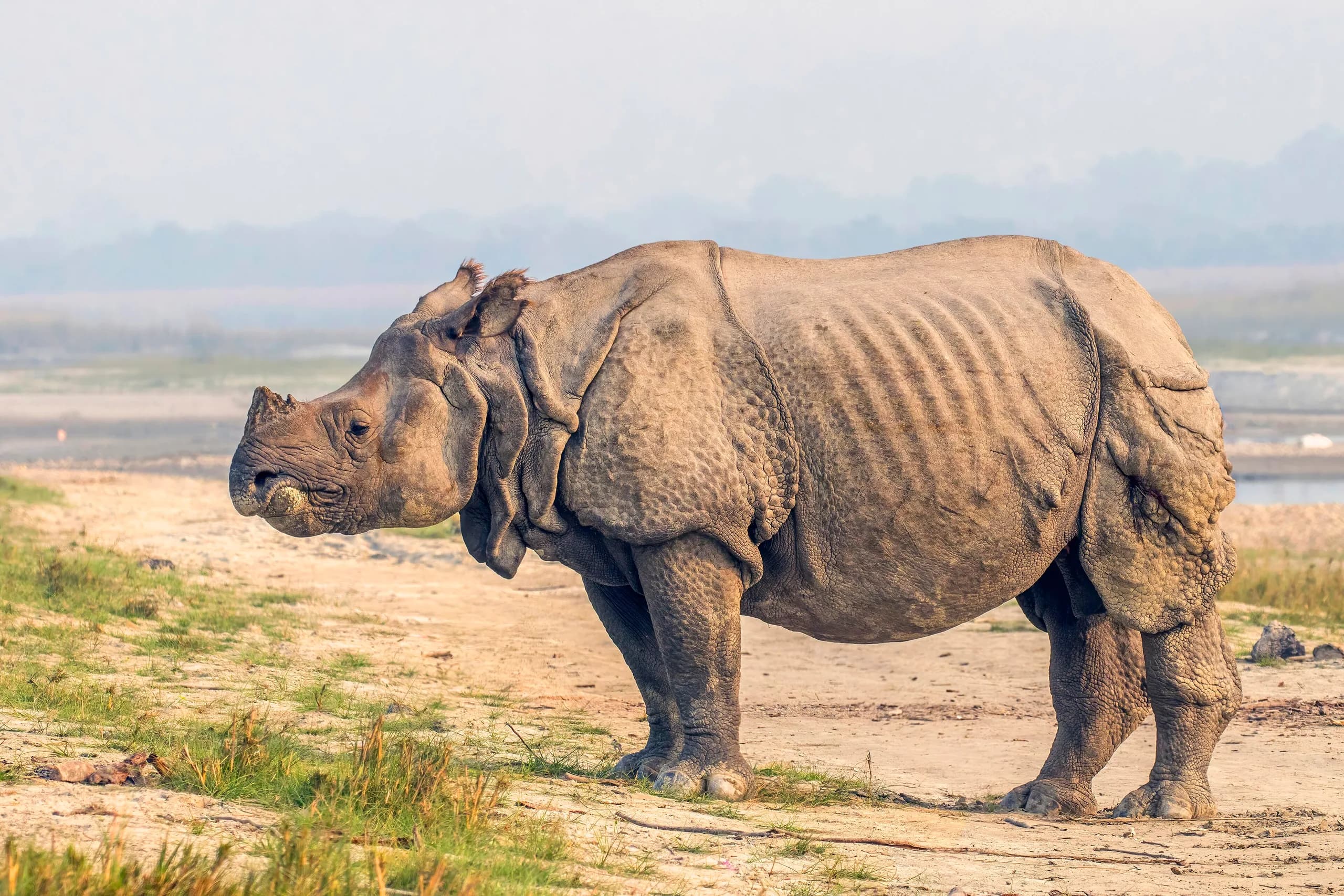
- Greater one-horned rhinoceros, the park’s best-known resident and a conservation success story
- Spotted deer, sambar, barking deer and hog deer
- Mugger crocodiles and the rare, fish-eating gharial
- Wild elephants, gaur and sloth bears, seen less often
- Bengal tigers: present, but rarely seen
- More than 500 species of birds, from kingfishers to hornbills
Ways to explore the park
Safari activities
| Activity | How long | Highlights |
|---|---|---|
| Jeep safari | Half or full day | Covers the most ground; the best chance of rhinos and deer |
| Canoe trip on the Rapti | About one hour | Crocodiles basking on the banks and riverside birds |
| Guided jungle walk | Two to four hours | Tracks, smaller wildlife and the forest close up, with two naturalist guides |
| Birdwatching | Early morning | Kingfishers, storks, peafowl and hornbills |
| Tharu village visit | Afternoon or evening | Traditional mud houses, local life and a stick dance performance |

The Tharu people
The Tharu are among the oldest communities of the Terai, known for their decorated mud-walled houses, fishing traditions and lively stick dance. Visiting a village with a local guide is a chance to learn about a culture that grew up alongside the forest.
Seeing wildlife responsibly
- Keep your voice down and wear neutral colours on walks
- Stay in the jeep or canoe and follow your naturalist’s instructions
- Never feed wild animals
- Keep a respectful distance from rhinos: they are fast and can charge
When to go and how to get there
October to March is the most comfortable time, with mild days and cool mornings. Wildlife sightings are often best from February to April, after the tall elephant grass has been cut. Summer is hot and humid, and some areas close during the monsoon.
Sauraha, the gateway village, is about five to six hours by road from Kathmandu or Pokhara, or a short flight to Bharatpur followed by a 30-minute drive.
Chitwan Jungle Safari
Explore this trip →Safari questions
Will I see a tiger?+
It’s possible but rare. Tigers are shy and mostly active at night. Rhinos, deer, crocodiles and birds are seen on almost every safari.
Is the jungle walk safe?+
Walks are led by two trained naturalists who know how wildlife behaves and how to keep the group safe. Listen to their instructions and stay together.
Can children come on safari?+
Yes. Jeep safaris, canoe trips and village visits suit families. Jungle walks aren’t suitable for young children, so we suggest jeeps for them.
What should I wear?+
Light, long-sleeved clothes in green, brown or khaki, comfortable shoes, a hat and insect repellent. Bring a warm layer for early mornings in winter.
How many days do I need?+
Two nights is enough for a jeep safari, canoe trip, a walk and a village visit. Stay three nights or longer for a full-day safari deep in the park.