

Acute mountain sickness (AMS) can affect anyone above about 2,500 m, whatever their fitness. It happens when you climb faster than your body can adapt to thinner air.
Symptoms to watch for
- Headache, often with one of the following
- Loss of appetite or nausea
- Unusual tiredness
- Dizziness
- Trouble sleeping
How to prevent it
- Above 3,000 m, sleep no more than 300–500 m higher each night
- Take a rest day every 1,000 m or every three to four days
- Climb high, sleep low: day hikes to higher ground help
- Drink plenty of water and avoid alcohol
- Ask your doctor before the trip about acetazolamide (Diamox)
Our itineraries are built around these rules, and guides carry a pulse oximeter and first-aid kit. This article is general information, not medical advice: talk to a travel doctor before high-altitude trips.
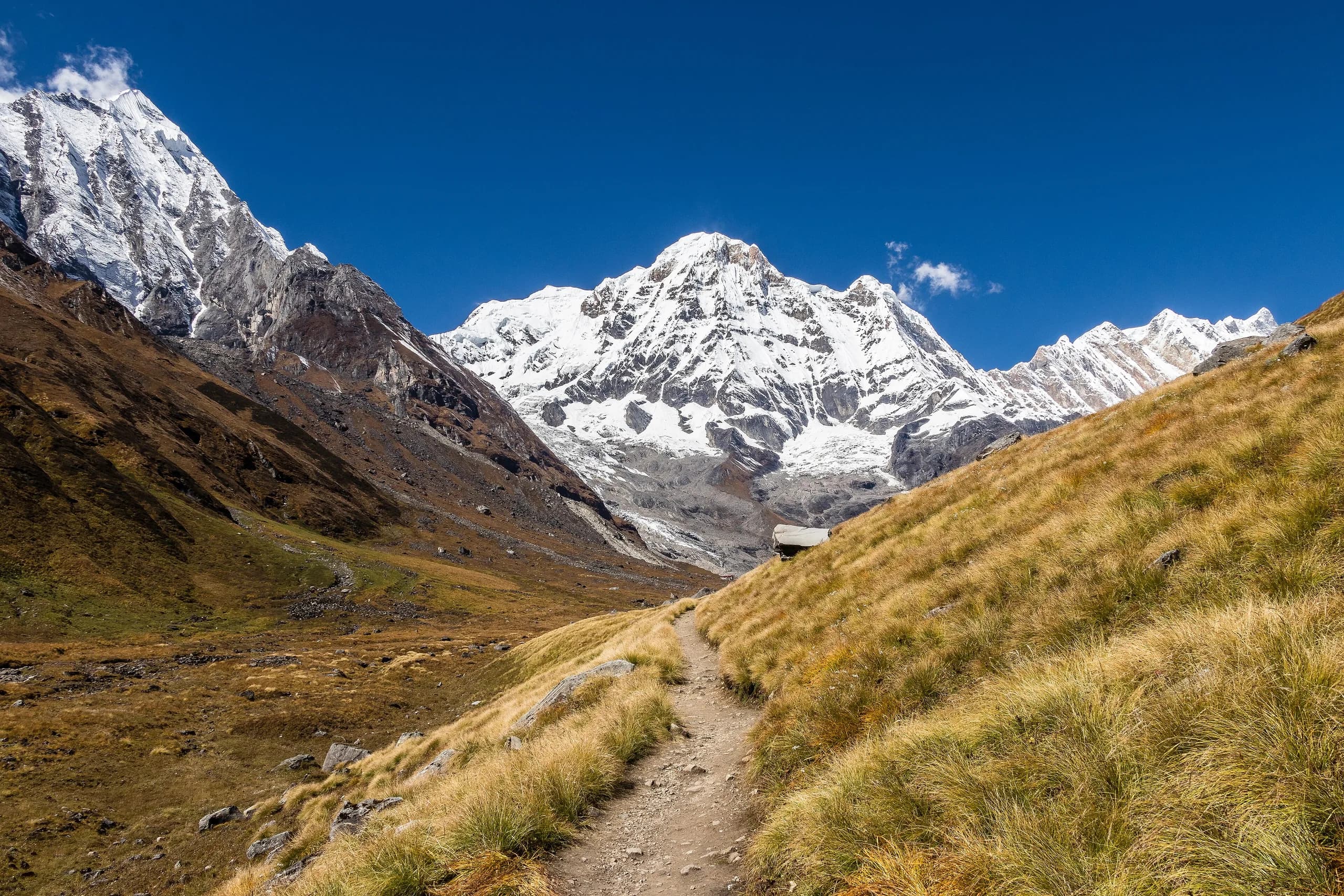
Annapurna Base Camp Trek
Explore this trip →Common questions
Does being fit protect me from altitude sickness?+
No. Fitness makes the walking easier, but it doesn’t change how your body adapts to altitude. Fit people who climb too fast are just as likely to get sick.
At what altitude does it start?+
Mild symptoms can appear above about 2,500 m. Most cases on Nepal treks happen above 3,500 m, where each breath holds roughly a third less oxygen than at sea level.
What does a pulse oximeter tell the guide?+
It measures the oxygen in your blood. A single reading means little, but a falling trend alongside symptoms helps the guide decide whether to rest, slow down or descend.
What happens if someone has to be evacuated?+
Your guide arranges a descent on foot or by horse, or a helicopter in serious cases. Helicopter evacuation is paid by your travel insurance, which is why it must cover the altitude of your trek.