
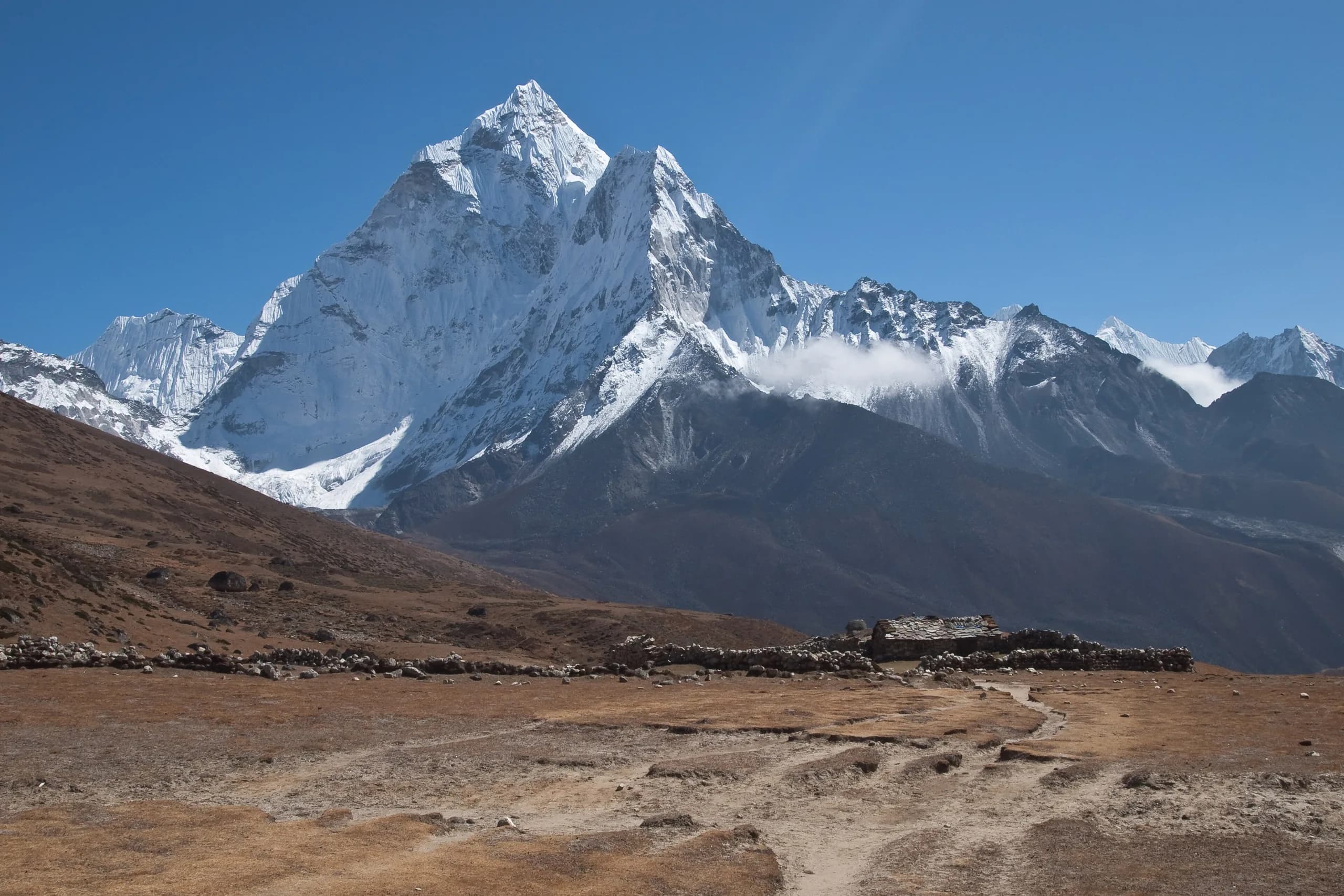

Walk slowly, sleep low, and let the mountain come to you.


The trek to Everest Base Camp follows the Dudh Koshi valley from the airstrip at Lukla (2,860 m) to the foot of the Khumbu Icefall (5,364 m). Most itineraries take twelve days on foot, including two rest days for acclimatisation.
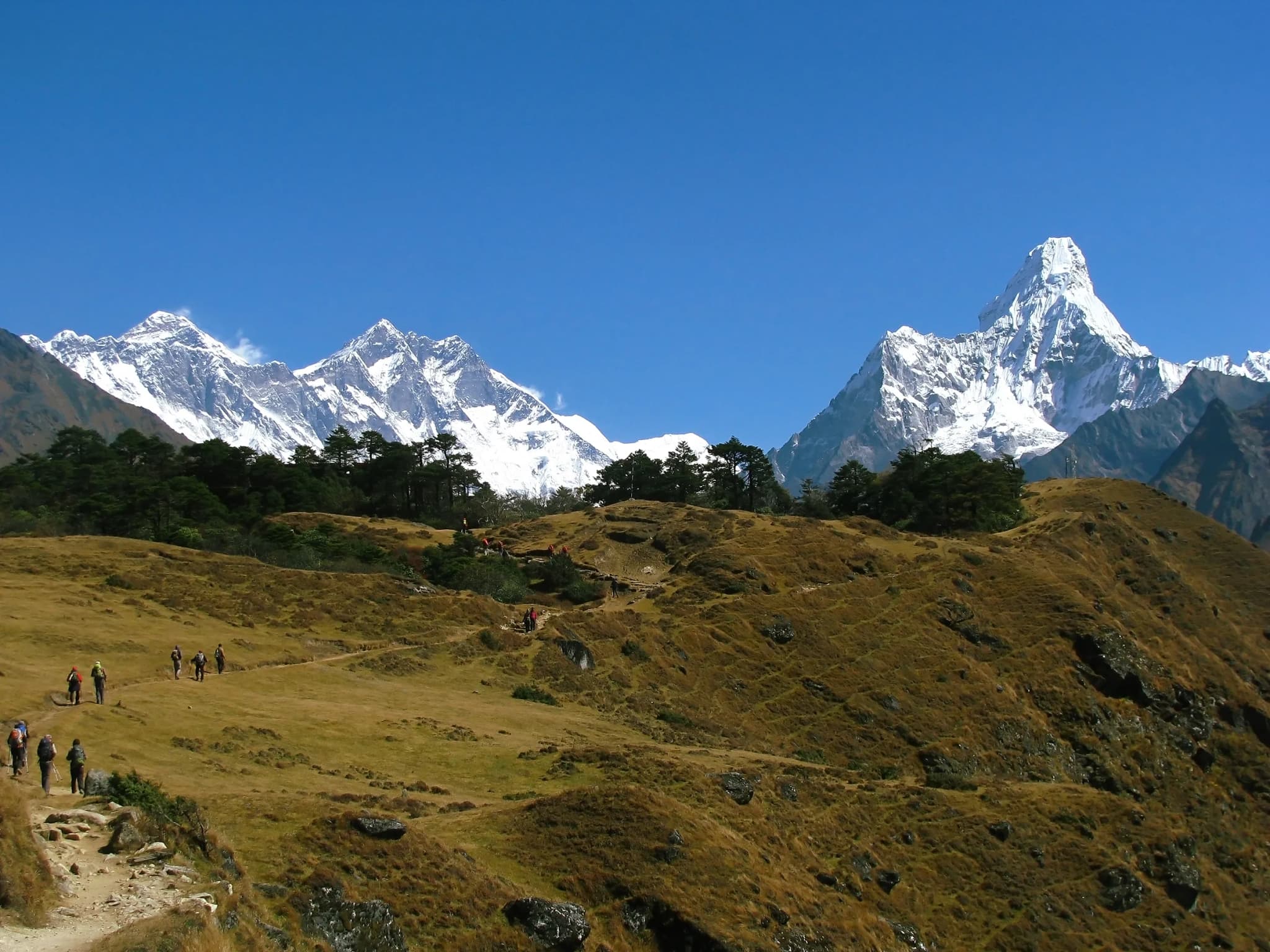
The route at a glance
- Lukla to Phakding (2,610 m)
- Phakding to Namche Bazaar (3,440 m)
- Acclimatisation day in Namche
- Namche to Tengboche (3,860 m)
- Tengboche to Dingboche (4,410 m)
- Acclimatisation day in Dingboche
- Dingboche to Lobuche (4,940 m)
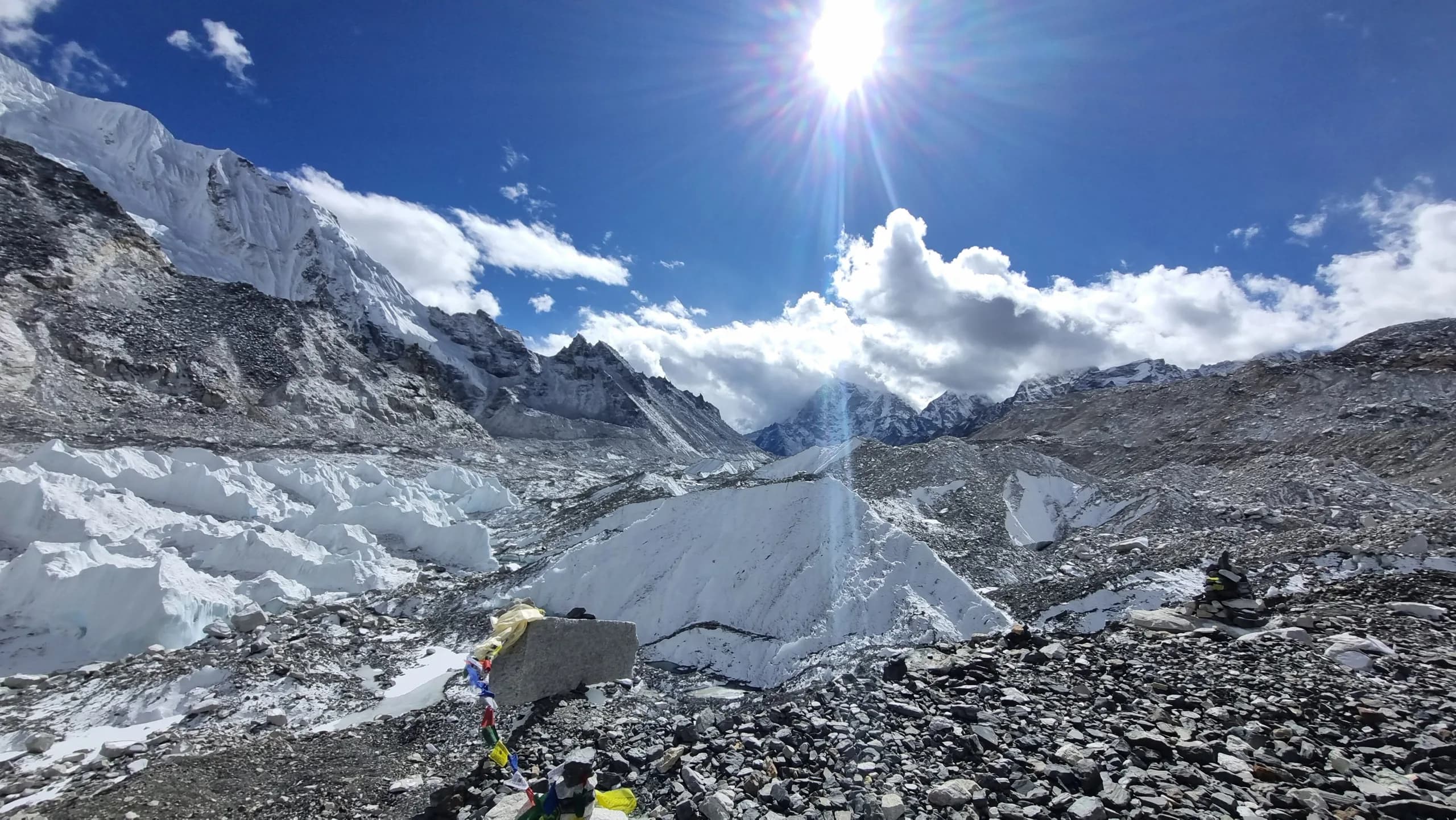
- Lobuche to Gorak Shep (5,164 m) and Everest Base Camp
- Kala Patthar (5,545 m) at sunrise, down to Pheriche
- Three days back to Lukla
Permits you need
- Sagarmatha National Park entry permit
- Khumbu Pasang Lhamu Rural Municipality entry fee
- A licensed guide is strongly recommended, and required in most other national parks
Flights between Kathmandu and Lukla depend on the weather, so leave at least one spare day before your international flight home.
Everest Base Camp Trek
Explore this trip →Common questions
How fit do I need to be?+
If you can walk six hours a day on hills with a light pack, you can do this trek. The altitude, not the distance, is the hard part.
Do I need climbing experience?+
No. The trail is a walking path; there is no technical climbing to base camp or Kala Patthar.
Can I charge my phone and use wifi?+
Most teahouses sell charging and wifi by the hour. Bring a power bank, as cold drains batteries quickly.
What happens if my Lukla flight is delayed?+
Mountain flights are often delayed by cloud or wind. Your guide rebooks you on the next available flight; that’s why we recommend a spare day in Kathmandu at the end of the trip.
Will I get altitude sickness?+
Anyone can, whatever their fitness. Our itinerary climbs slowly with two acclimatisation days, and your guide checks how everyone is doing every evening. If symptoms get worse, we go down.