
Pack for four seasons in one day, then take out anything you won’t wear twice.


On a teahouse trek you sleep in lodges and eat in their dining rooms, so there’s no tent or stove to carry. What you do need is clothing that copes with hot valley mornings and freezing nights at altitude, often on the same day.
Our treks include a porter for every two trekkers, so you walk with a day pack and your main bag travels ahead to the next lodge. That shapes everything below: keep the porter bag light and the day pack ready for anything.
The layering system
Several thin layers keep you warmer and drier than one thick coat, because you can add and remove them as you climb and stop.
What to wear
| Layer | What to bring | Why |
|---|---|---|
| Base layer | Two quick-dry or merino tops and one pair of thermal leggings | Moves sweat away from your skin; merino stays fresher for longer |
| Mid layer | One fleece jacket or warm pullover | Your main warm layer for walking on cold mornings |
| Insulation | Down or synthetic jacket with a hood | Essential above 3,500 m, in the evenings and at sunrise viewpoints |
| Shell | Waterproof, windproof jacket and over-trousers | Rain at low altitude, wind and snow on the passes |
| Legs | Two pairs of trekking trousers, one pair of shorts | Shorts for the warm lower valleys; trousers higher up |
| Head and hands | Sun hat, warm hat, buff, liner gloves and warm gloves | Strong sun by day, sharp cold at night |
Footwear
Bring broken-in trekking boots with ankle support and a grippy sole. New boots are the most common cause of blisters, so walk at least 30–40 km in them before you fly. Add light shoes or sandals for the evenings and three or four pairs of trekking socks.
Sleeping
- A sleeping bag rated to about −10 °C for treks above 4,000 m; lodges supply blankets but rooms are unheated
- A sleeping bag liner adds warmth and keeps the bag clean
- Earplugs: walls between rooms are thin
- A head torch with spare batteries for night-time trips to the bathroom
Your day pack
- A 25–35 litre pack with a rain cover
- Two litres of water capacity, plus purification tablets or a filter
- Sunscreen (SPF 50), lip balm with SPF and sunglasses with good UV protection
- Snacks: nuts, chocolate or energy bars for the long climbs
- Your warm jacket, waterproof and gloves, even on sunny mornings
- Personal first-aid kit: blister plasters, painkillers, rehydration salts and any medicines you take
- Toilet paper, hand sanitiser and a small rubbish bag
Buying or hiring gear in Kathmandu
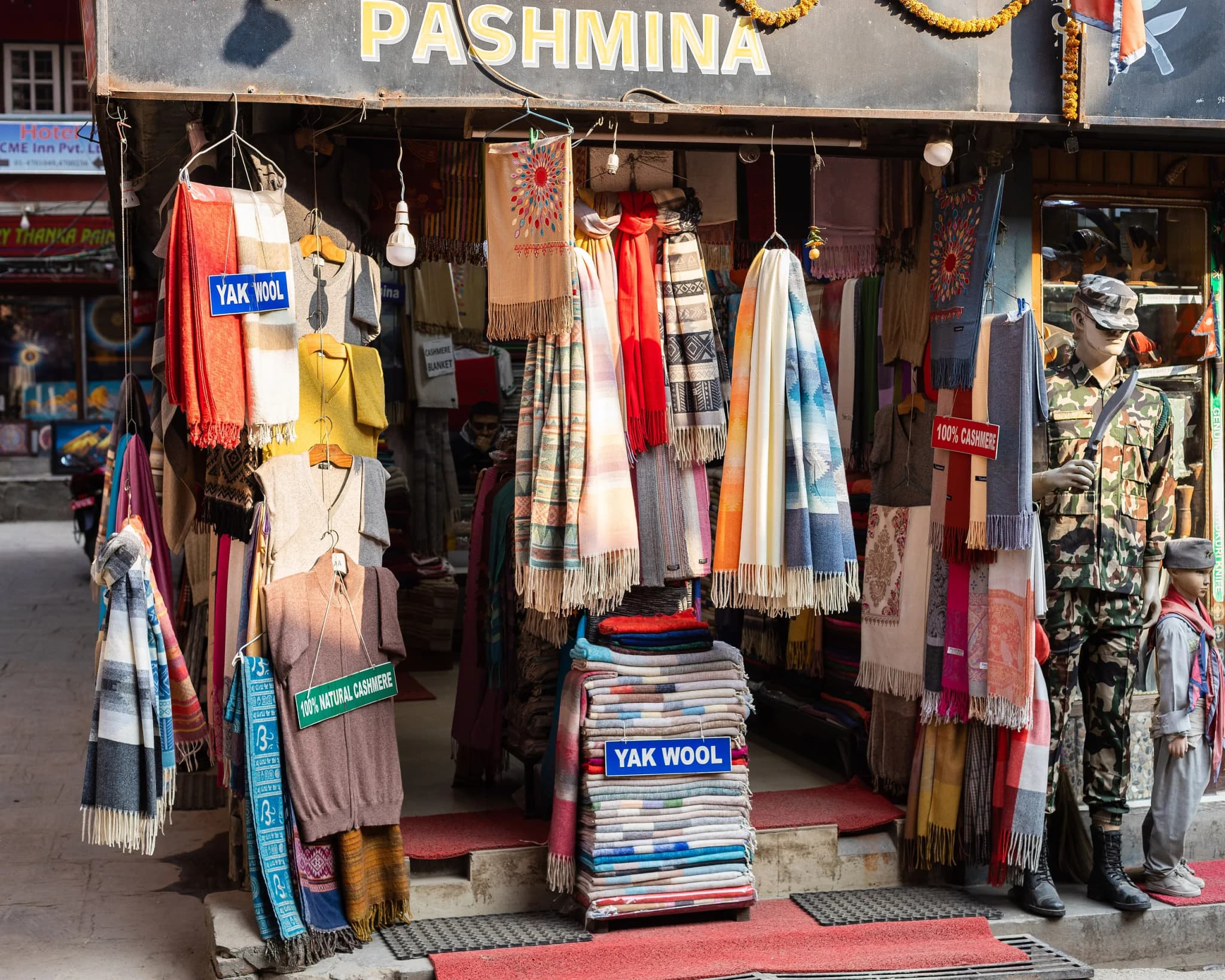
Thamel, the traveller district in Kathmandu, is full of shops selling and renting trekking gear. Down jackets and sleeping bags are easy to hire for the length of a trek, which saves space in your luggage on the flight. We can arrange both through our gear hire add-on and have them ready when you arrive.
Boots are the exception: buy and break them in at home. Locally made fleece, hats and gloves are good value; for waterproofs and base layers, bring what you trust.
Documents and money
- Passport valid for at least six months, with a copy stored separately
- Four passport photos for permits (we can print them in Kathmandu)
- Travel insurance details, including the emergency phone number
- Nepali rupees in cash: ATMs are rare once you leave the towns
- Money for snacks, hot showers, phone charging and tips for your guide and porters
Everest Base Camp Trek
Explore this trip →Packing questions
Do I need trekking poles?+
They’re not essential, but most people find poles take a lot of strain off the knees on the long descents. They’re easy to hire in Kathmandu.
Can I wash clothes on the trek?+
You can wash small items in a basin at most lodges, but they dry slowly in the cold. Quick-dry and merino clothing makes this much easier.
Do I need my own sleeping bag?+
Yes, for any trek above about 3,000 m. Lodges give you blankets, but nights are cold. You can hire a good down bag in Kathmandu.
What should I leave in Kathmandu?+
City clothes, spare electronics and anything valuable you won’t need. Hotels in Kathmandu store bags for trekkers at little or no cost.
Is it worth bringing a water filter?+
Yes. Refilling from taps or lodge water with a filter or purification tablets saves money and keeps plastic bottles off the mountains.