
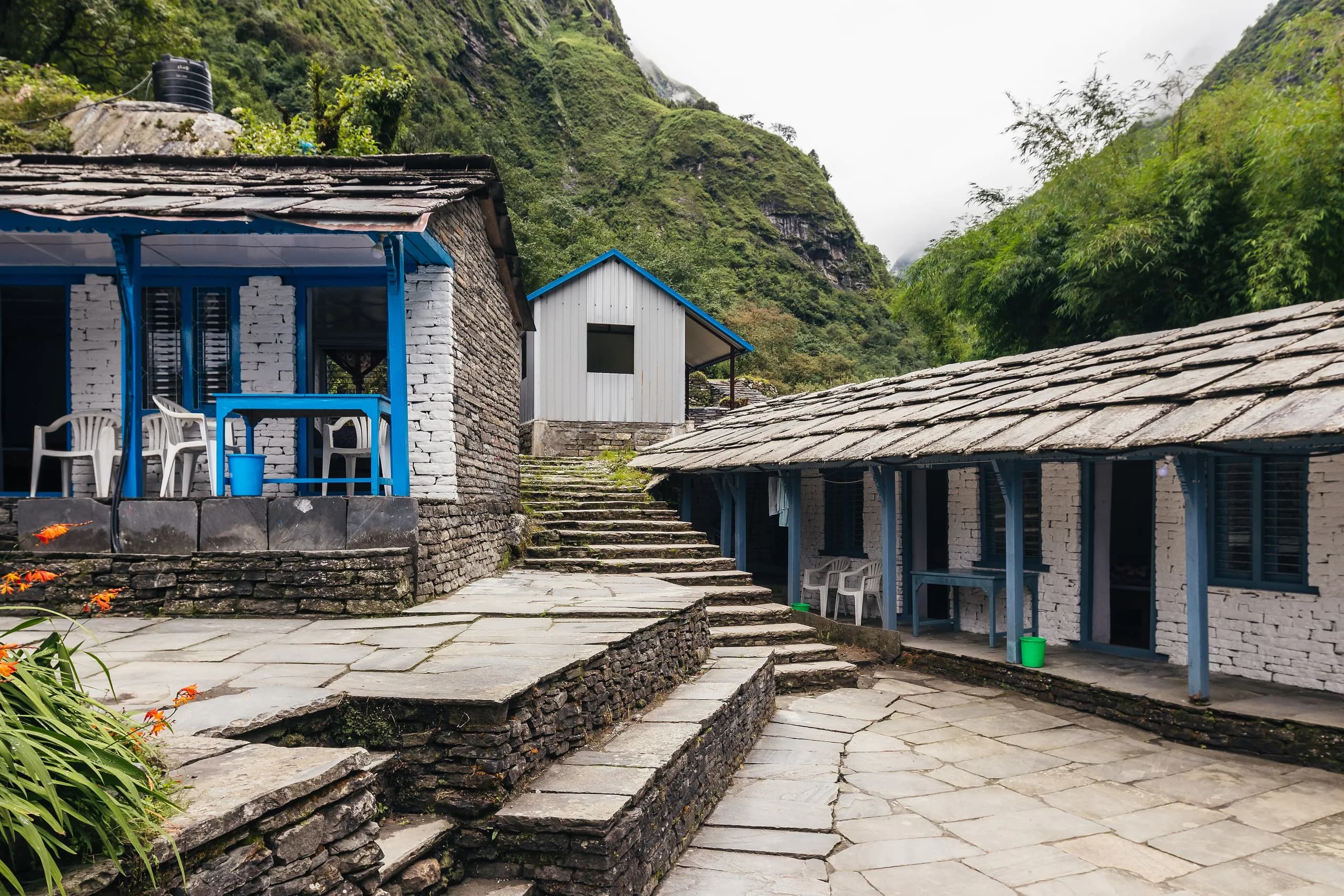

Teahouse trekking means walking from village to village and staying in family-run lodges along the way. It’s how most people trek in Nepal: no camping gear, a warm dining room every evening, and a real glimpse of mountain life.
What a teahouse is like
Lodges are simple, clean and friendly. Most rooms are twin rooms with two single beds, a mattress, a pillow and a blanket. Lower down you may find rooms with their own bathroom; higher up, toilets and washrooms are usually shared, and squat toilets are common.
Rooms are not heated. The social heart of every teahouse is the dining room, where a stove is lit in the evening and trekkers from every trail swap stories over tea.
Food on the trail
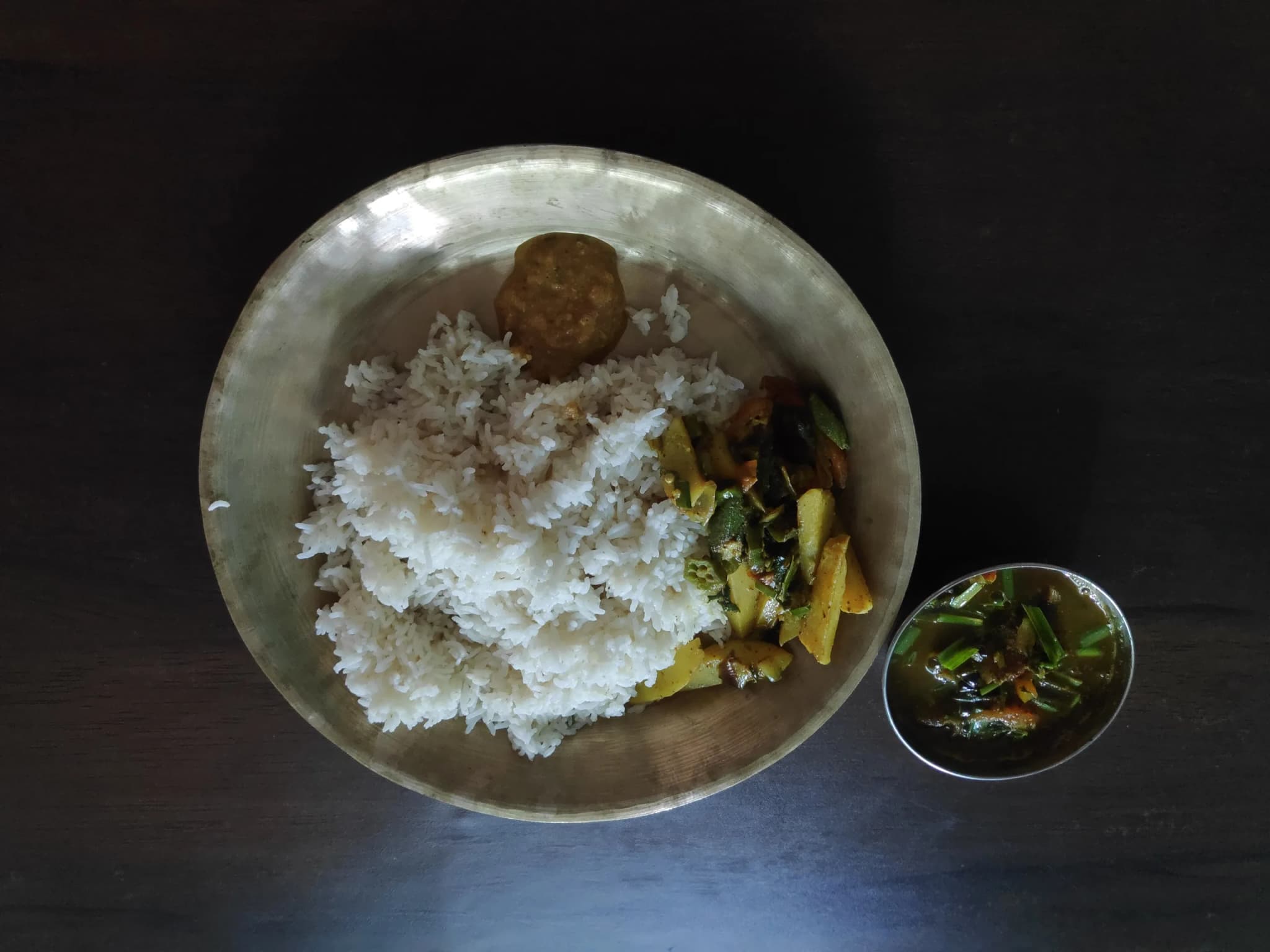
Every lodge has a menu, often surprisingly long: noodles, fried rice, pasta, potatoes, pancakes, soups and eggs. The local favourite is dal bhat, a plate of rice with lentil soup, vegetable curry and pickle. It’s filling, freshly cooked and usually comes with a free second helping.
What costs extra
Small costs along the way
| Service | What to expect | Tip |
|---|---|---|
| Hot shower | Gas or solar heated; a small charge, more as you climb | Shower in the afternoon, while there’s sun and hot water |
| Phone charging | Charged per device or per hour at higher lodges | Bring a power bank and keep it warm in your sleeping bag |
| Wi‑Fi | Available at many lodges, slow and paid; regional data cards cover parts of Everest and Annapurna | A local SIM with data works lower down |
| Drinking water | Bottled water gets expensive higher up; many villages have refill stations | Bring a filter or purification tablets |
| Snacks and drinks | Chocolate, biscuits, tea, coffee and soft drinks; prices rise with altitude | Bring some snacks from Kathmandu |
Teahouse and trail etiquette
- Walk clockwise around stupas, chortens and mani walls
- Ask before taking photos of people, especially inside monasteries
- Take off your shoes when entering a monastery or someone’s home
- Dress modestly: cover shoulders and knees in villages
- Give way to yaks and porters, and always step to the uphill side of the trail
- Carry your rubbish out: bins are rare and burning plastic is a problem in the mountains
Booking lodges
In the busy months, popular villages fill up early in the day. Your guide books ahead by phone each night, so a bed is waiting when you arrive. That’s one of the quiet advantages of trekking with a local guide.
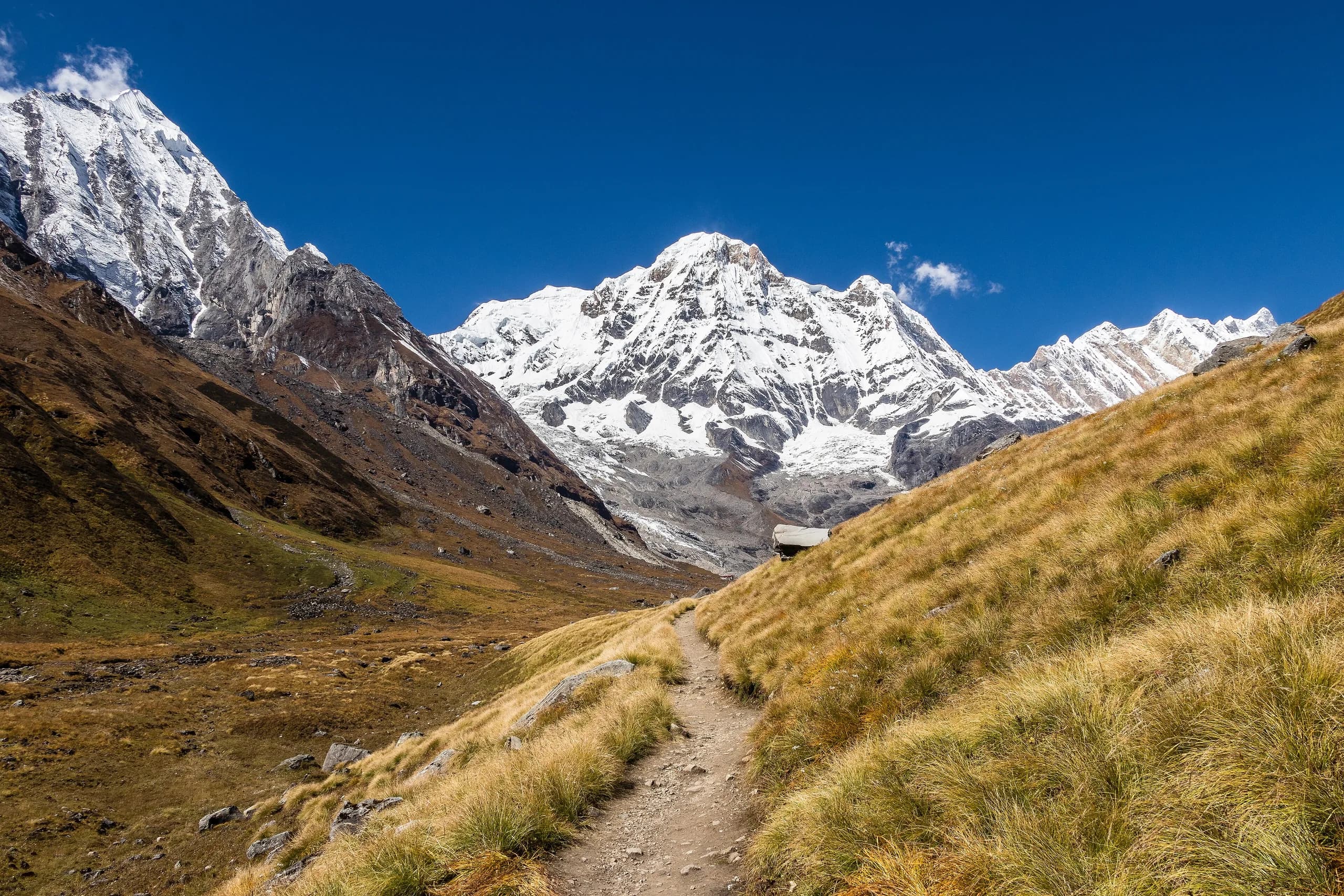
Annapurna Base Camp Trek
Explore this trip →Teahouse questions
Do I get a room to myself?+
Rooms are usually twin share. If you’re travelling alone and want your own room, choose the single room add-on; on the busiest nights in high villages, lodges may still ask solo trekkers to share.
Is the food safe to eat?+
Freshly cooked hot food is the safest choice. Many trekkers go vegetarian above the road head, since meat is carried up for days without refrigeration.
Can I get vegan or gluten-free food?+
Dal bhat, potatoes, rice and vegetable dishes suit most diets. Tell us in advance and your guide will help you order at each lodge.
Are teahouses open all year?+
Most are open through the trekking seasons. Some lodges in high villages close in the coldest weeks of winter, and your guide plans the overnight stops around the ones that are open.
How cold are the rooms?+
Above 4,000 m, rooms can drop below freezing at night. A warm sleeping bag, a hat and a hot drink before bed make all the difference.